


Give Your Home a Fall Refresh!
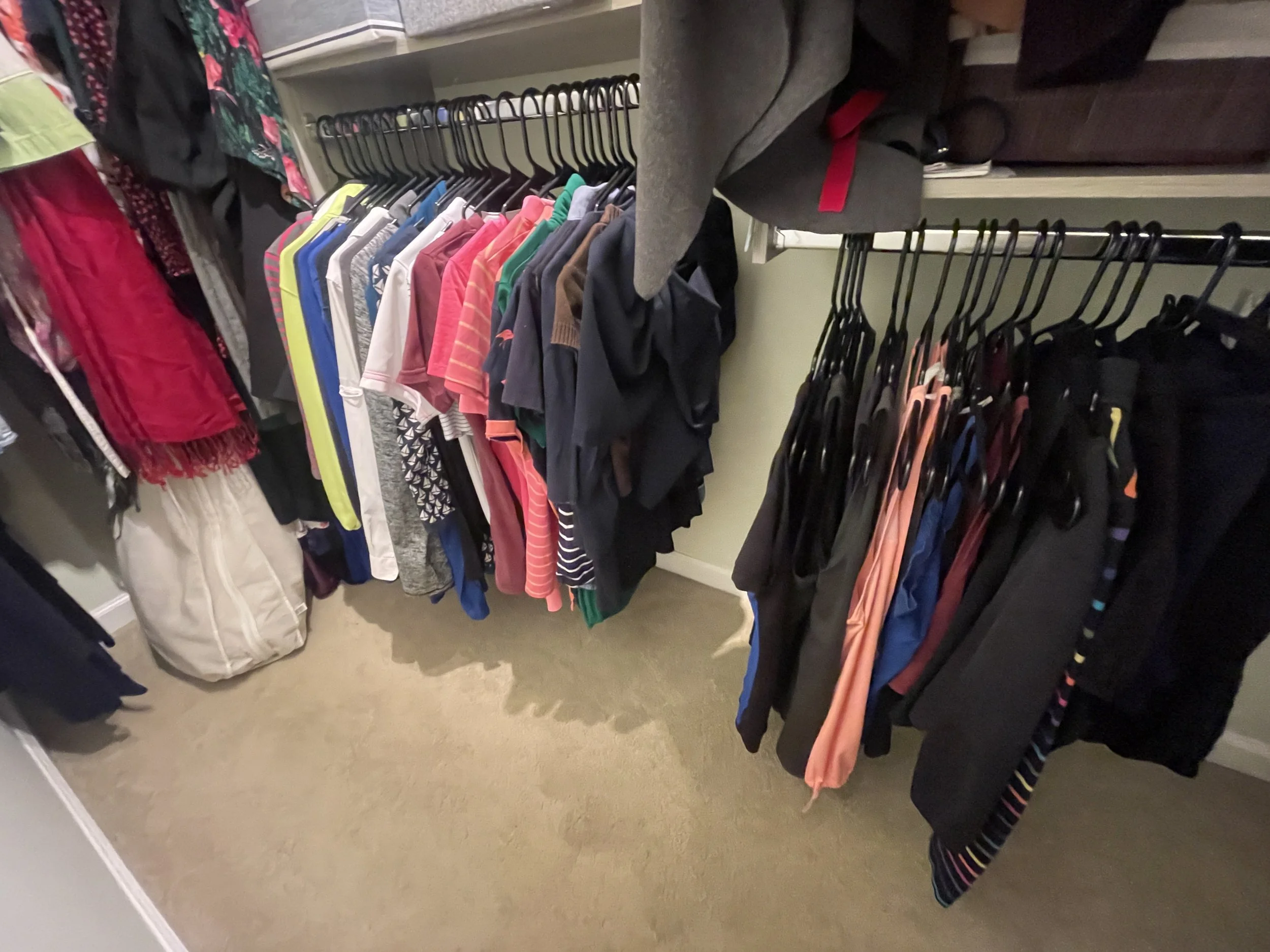
Has it been a while since you assessed what is in your wardrobe? Have you started looking for a sweater you haven’t worn in months, only to find yourself digging through a crowded closet? Or maybe the garage has collected so much over the summer that putting anything away feels like a project.
October is a good opportunity to take a fresh look at the spaces you use every day. As clothing, activities, and routines change, your organizing systems may need a few adjustments, too.
You don’t have to tackle the whole house at once. Start with one area that would make your day easier.
Start With Your Closet
Clothing is often a practical place to begin organizing because you use it every day. Compared with photos and memorabilia, everyday clothing can also involve fewer emotionally difficult decisions.
Start with one manageable category, such as sweaters, shoes, or jackets. Bring similar items together so you can see what you actually own.
Ask yourself:
Does this fit comfortably?
Do I enjoy wearing it?
Does it work for my life today?
Would I choose it again?
Separate what you’re keeping from what you’re ready to donate or let go. If something needs a repair, give yourself a realistic plan for getting it done.
As you organize for fall, keep transitional clothing accessible. Here in Georgia, you may still reach for short sleeves while also needing a light jacket in the morning. Your closet should support the weather you’re actually dressing for.
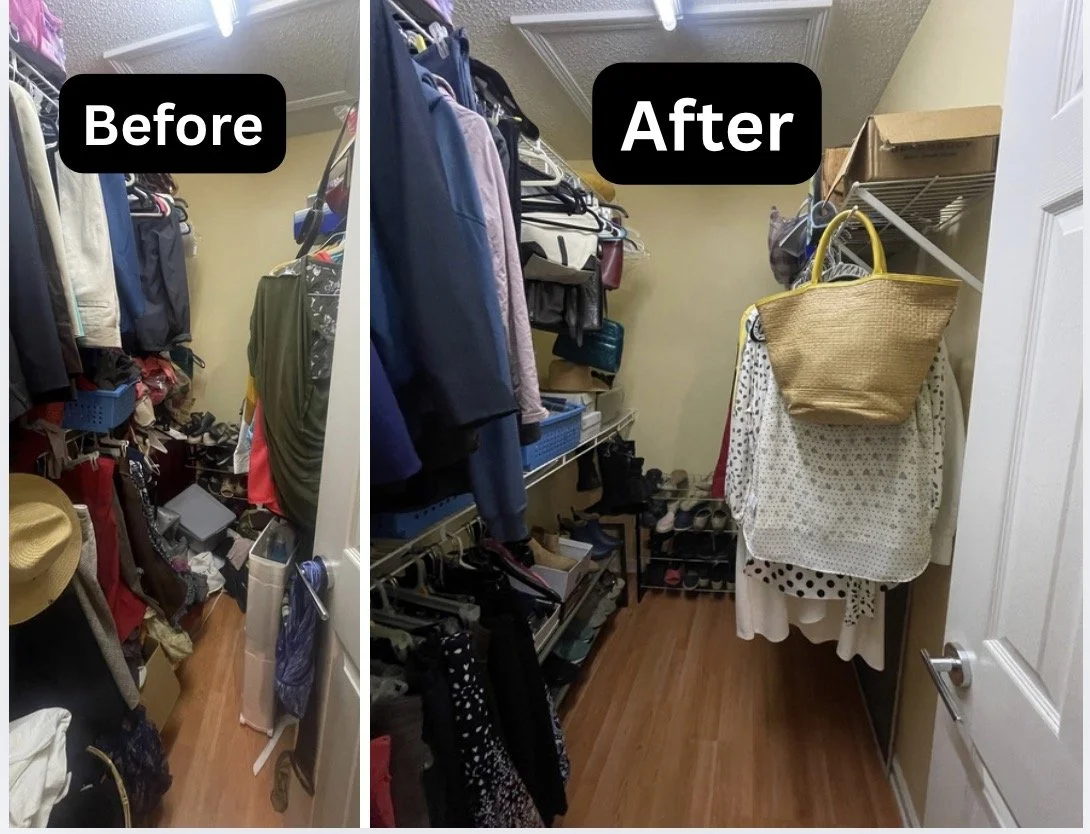
Shop Your Closet Before You Shop the Store
Have you ever bought something, brought it home, and realized you already owned almost the same thing?
When clothing is crowded together or buried underneath other items, it’s easy to forget what you have.
Group clothing by type, then by color within each category. Keeping similar pieces together makes it easier to spot duplicates, put outfits together, and recognize what you might actually need.
Before buying another sweater or pair of boots, take a look at what’s already there. An organized closet can help you use more of what you own.
Make Your Existing Closet Work Better
Before deciding your closet is too small, look at how you’re using the space.
Could a hanging rod be adjusted? Would another shelf help? Is there usable space underneath shorter hanging clothes?
Once you’ve decided what you’re keeping, assign each category a home. Then measure the space before buying storage.
Organize first. Measure second. Shop last.
Baskets and bins are useful when they have a clear purpose. A basket for workout clothes or a bin for scarves gives those items a place to return to. Use containers you already own when they work.
The goal is a system that makes your belongings easy to see, easy to access, and easy to put away.
Give the Garage a Seasonal Reset
The garage can become a holding area for unfinished projects, outdoor equipment, donations, and things that haven’t found a home elsewhere.
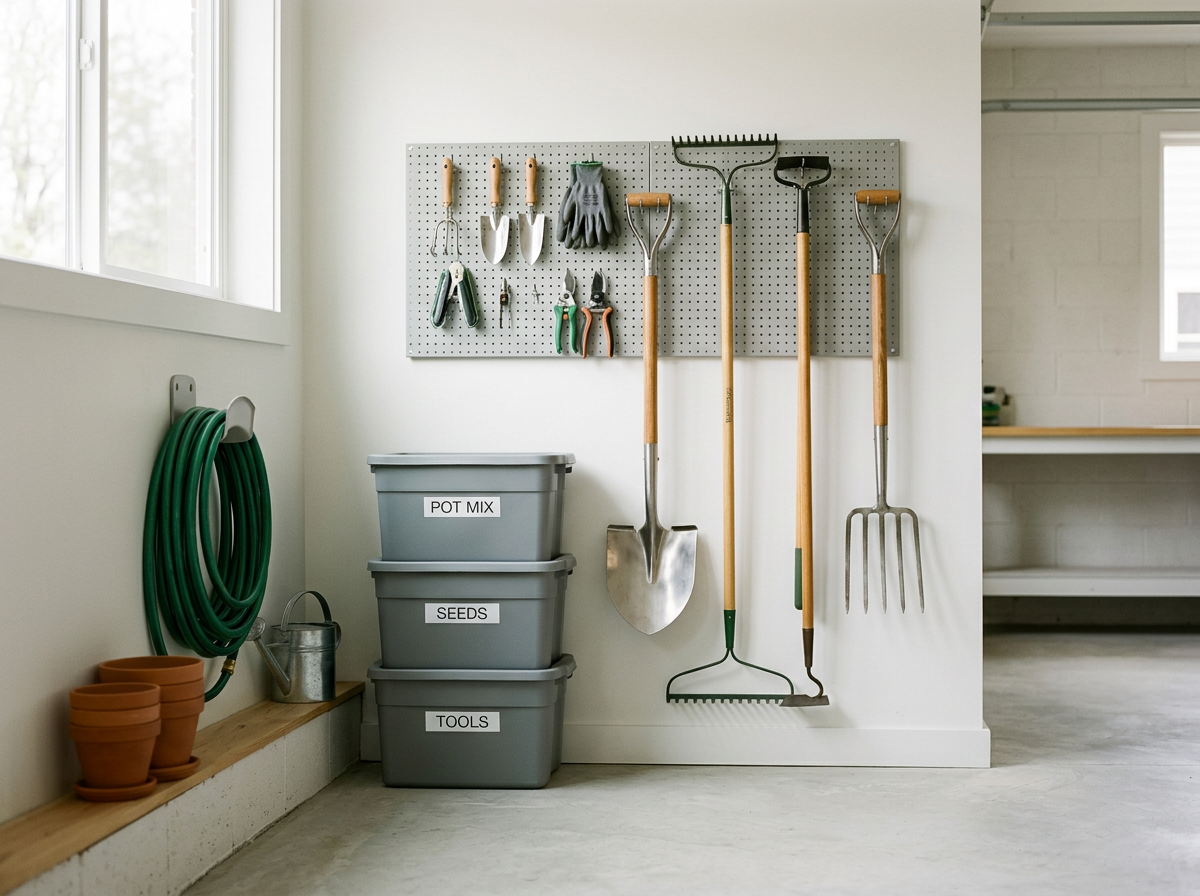
Choose one section to work on first. Gather similar items together—gardening supplies, tools, or outdoor recreation equipment—and decide what still belongs in your home.
Move equipment you’re using this season into convenient locations. Put less frequently used items farther back, while keeping walkways clear.
If you have donations waiting by the door, schedule the drop-off. That final step is part of finishing the organizing project.
Clear the Office Catch-All
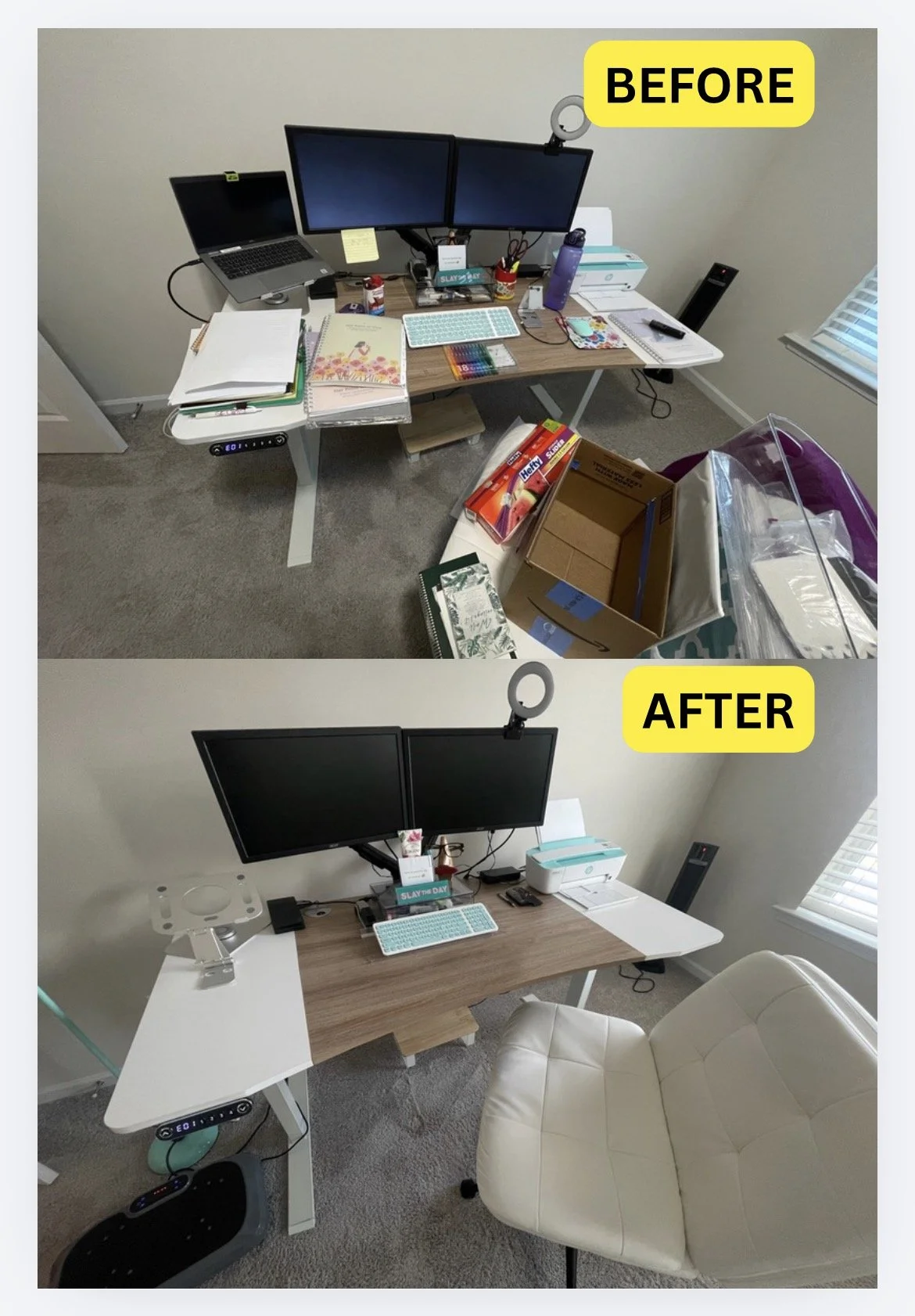
If your desk has become the landing spot for mail, receipts, and miscellaneous belongings, start by returning anything that belongs elsewhere.
Then sort paperwork into a few useful categories:
Action needed
File or keep
Recycle or shred
Give papers that need attention one designated spot, and schedule time to handle them. A pile labeled “to do” still needs a next step.
Keep the supplies you use regularly within reach. Leave yourself enough clear space to sit down and begin working without having to move a pile first.
Choose One Improvement You Can Maintain
You don’t need to organize every closet, cabinet, and drawer this October.
Choose the space that causes the most daily frustration. Maybe it’s finding clothes in the morning, putting equipment away in the garage, or locating an important paper.
After organizing, take a few minutes each week to return items to their homes. If something repeatedly ends up in the wrong place, consider whether its assigned home is convenient enough.
A good organizing system should make maintaining your space easier.
Need help getting started? Naomi Organizing helps homeowners in Austell, Mableton, Marietta, Kennesaw, and surrounding communities create practical systems for their homes.
Visit naomiorganizing.com to learn more.
Which space would make the biggest difference in your day if it were organized—your closet, garage, or office? Tell me in the comments.
